Changelog

Follow new updates and improvements to Secfix.

Issues tracker for audit findings & Vendor certifications found by AI

Track audit findings in Secfix with the Issues tracker

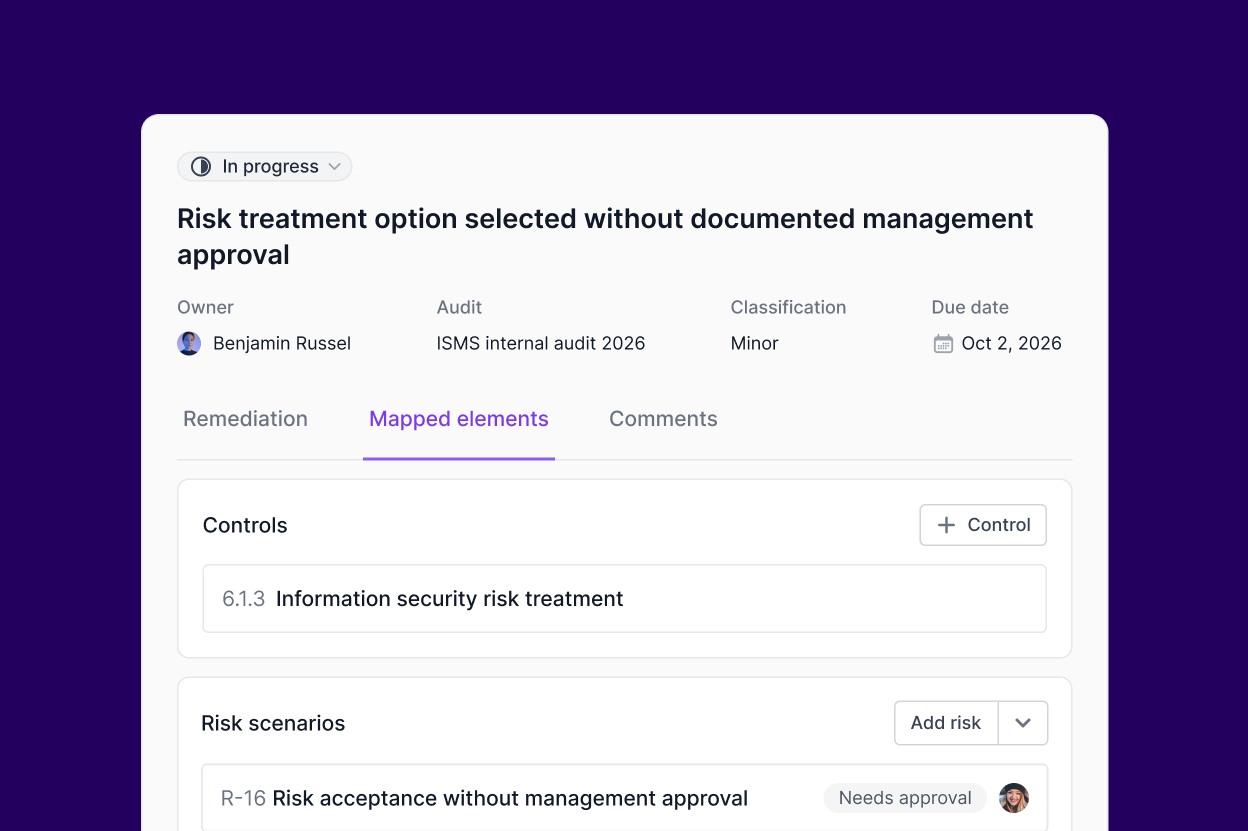
The Issues tracker brings your audit findings into Secfix, right next to the controls and risks they affect. You can track every finding from the auditor's report to closure without losing the compliance context.

What you can do

  • Keep every audit in one place: track findings from internal and external audits.

  • Map findings to controls and risk scenarios: link each finding to the controls it was raised against and the risks it relates to. Findings also show up on those controls and risks, so you see the full picture wherever you look.

  • Turn findings into action: document root causes and corrective actions, split the work into tasks, and attach evidence of every fix.
Vendor certifications and compliance documents, found for you

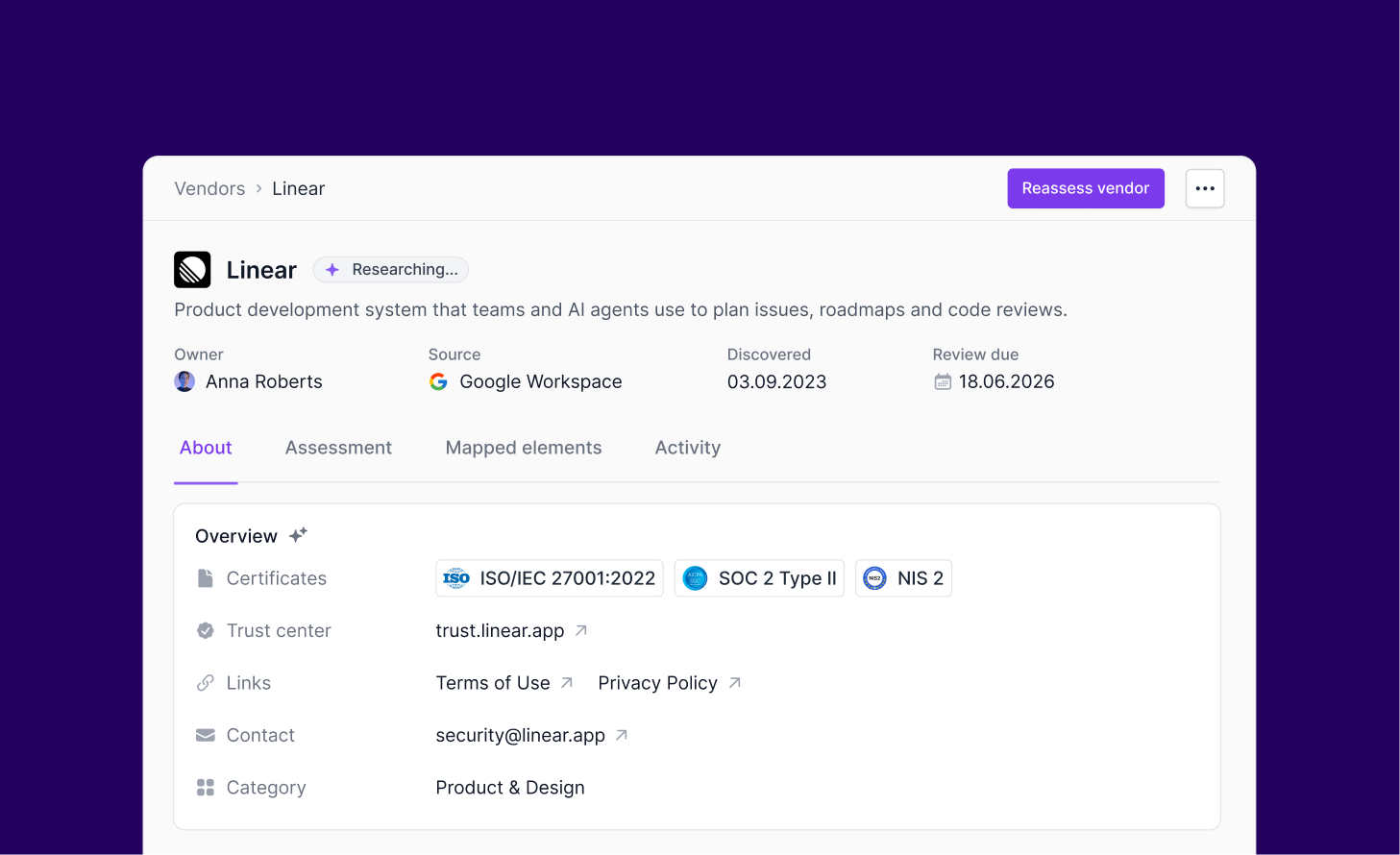
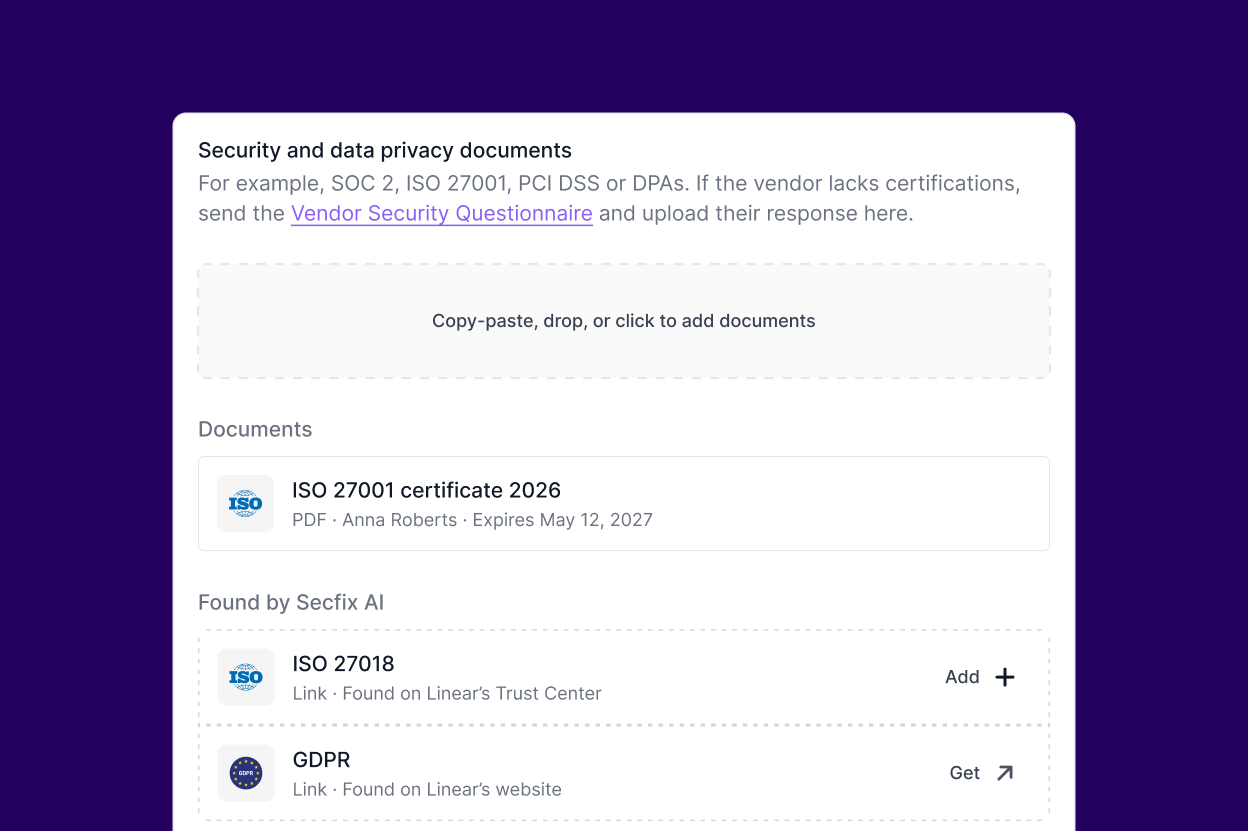
Last week our AI agents started doing your vendor research. Now they also look for vendor's certifications and compliance documents, so you don't have to dig through trust centers yourself.

How it works

  • Found by Secfix AI: when the agents find a vendor's certificates or reports, such as ISO 27001, SOC 2 or TISAX… they list them on the vendor page for you to review.

  • Add in one click: if the document can be downloaded, click Add and it's saved to the vendor straight away.

  • Direct link when access is needed: if the document sits behind a login or a request form on the vendor's trust center, you get a link that takes you straight there.
25+ new integrations and Jira risk treatment

25+ new integrations

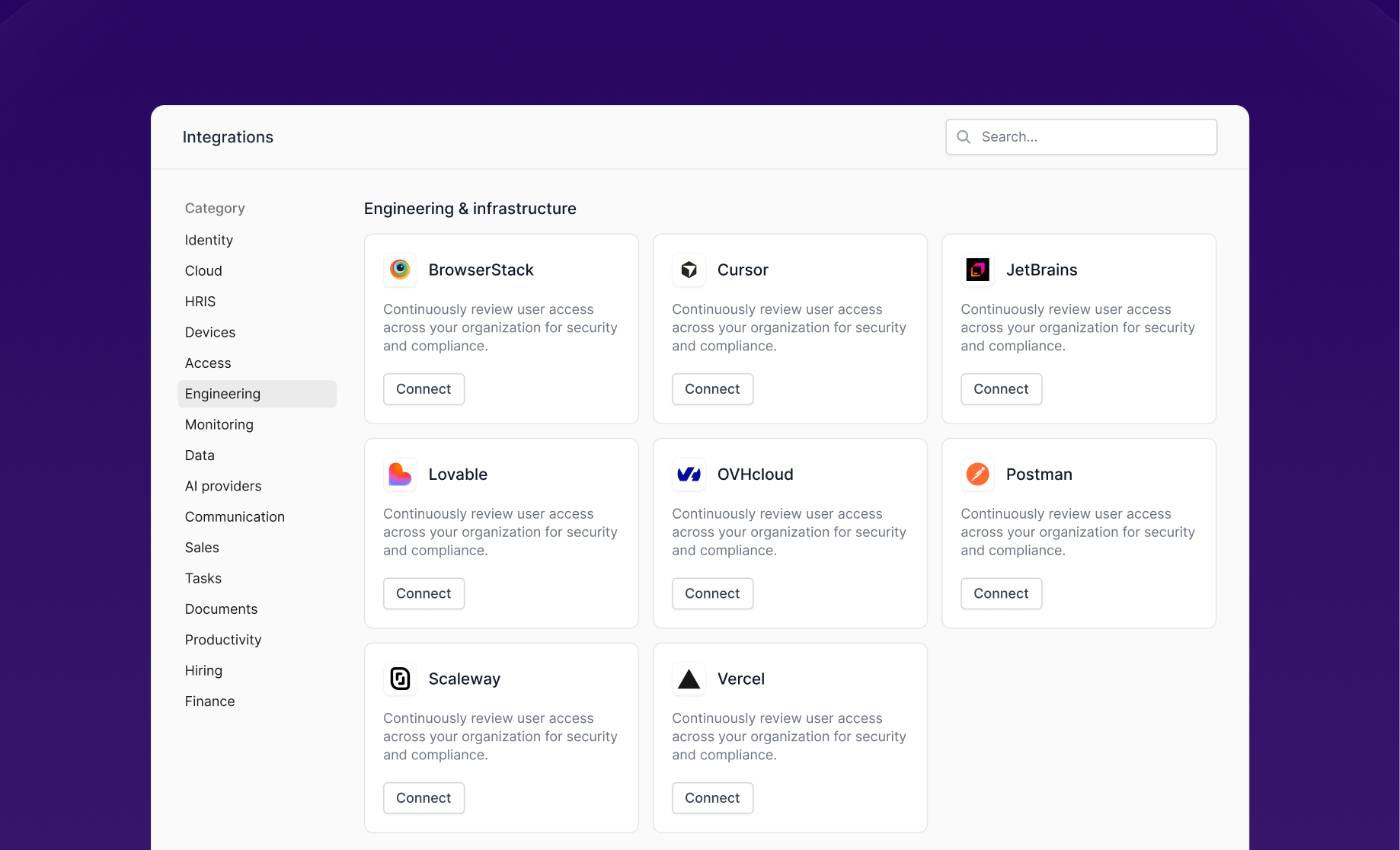
We’ve launched 25+ new integrations across engineering, security, network access, automation, data, communication, CRM, documents and content.

  • Engineering & infrastructure: BrowserStack, Cursor, JetBrains, Lovable, OVHcloud, Postman, Scaleway, Vercel

  • Security & vulnerability management: CrowdStrike, Snyk, Tenable

  • Identity & access: Dashlane, NetBird, Proton, Tailscale, Twingate, Zoho Vault

  • Automation & workflows: n8n, UiPath, Workato, Zapier

  • Data & vector databases: Pinecone, Qdrant Cloud

  • Communication: sipgate

  • CRM & sales: Zoho Bigin

  • Document management: PandaDoc

  • Content & websites: WordPress

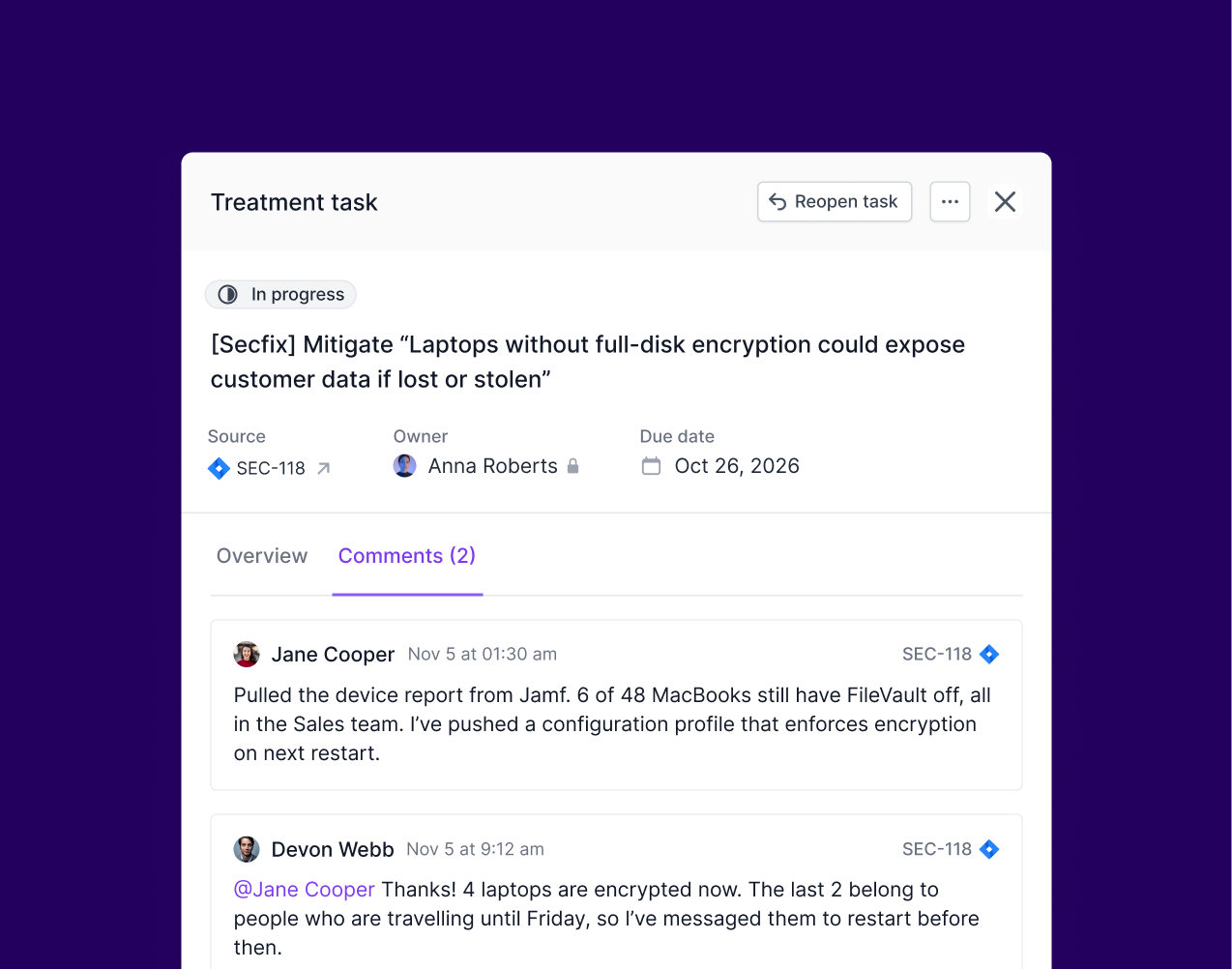
Create and link Jira tasks for risk treatment

You can now manage risk treatment tasks in Jira without leaving Secfix. When you plan a treatment, you can either:

  • Create a new Jira task directly from Secfix, or

  • Link an existing Jira task that your team is already working on.

Once a task is connected, its details stay in sync between the two tools:

  • Due date

  • Assignee

  • Status

  • Comments: Jira comments now show up in Secfix too, so you can follow progress without switching tools.

AI agents that research your vendors & labels across Secfix

Your vendor research, done by AI agents

Secfix now has AI agents that do the vendor research for you. Add a vendor and the agents fill in its profile in seconds. They keep checking afterwards, so your vendor inventory stays current without anyone having to maintain it.

What the agents do

  • Build the vendor profile: they write a description of what the vendor does, assign its category, and list the services it provides.

  • Find the important links: they locate the privacy policy, terms of use, trust center, and security contacts and link them to the vendor.

  • Keep everything up to date: when a vendor changes its policies, trust center, or contacts, the agents update the profile.

Organize your inventory, vendors, risks, and evidence with labels

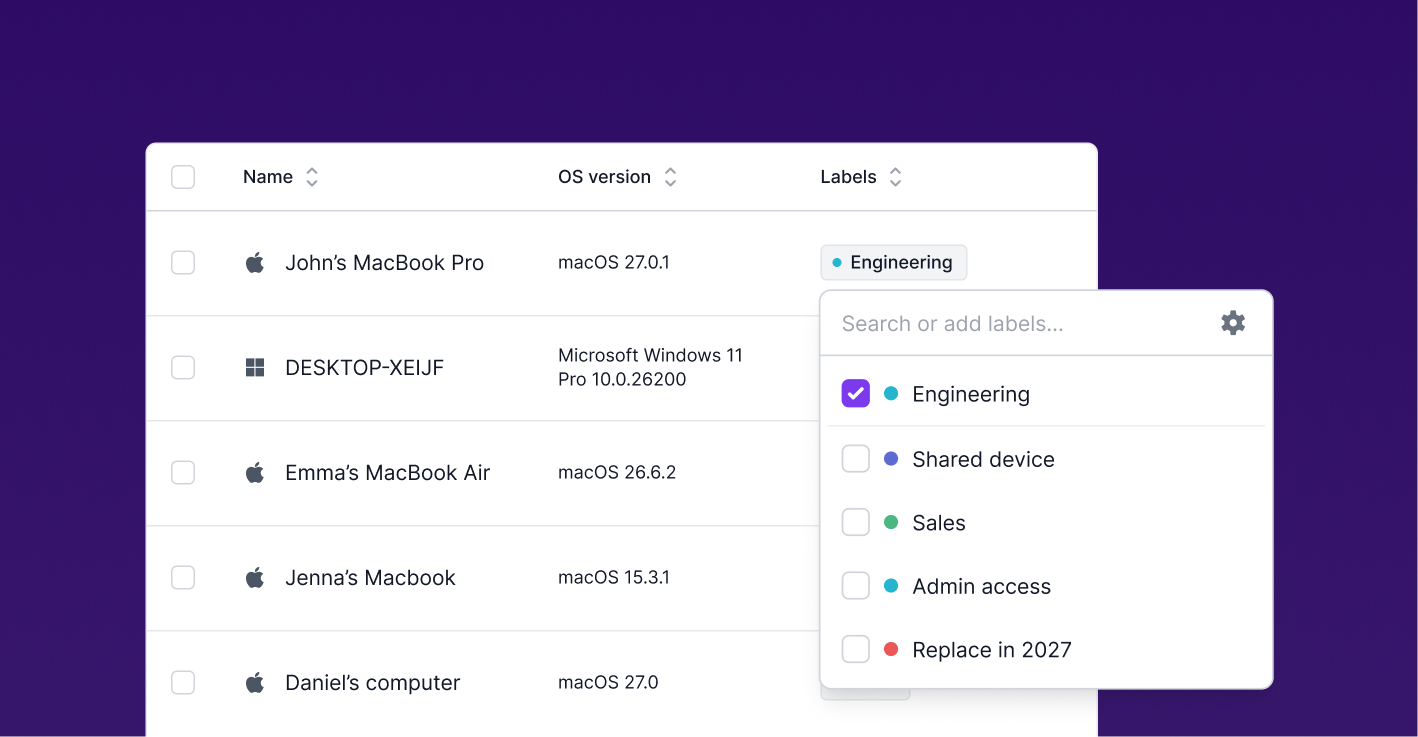
You can now group your assets, vendors, risks, and evidence your own way. Create labels for types, assigned teams, sub-categories, locations, or anything else you need.

What’s new

  • One set of labels everywhere: create a label once and use it across Inventory, vendors, the risk register, and evidence.

  • Filter by label: quickly find what you need, for example while preparing for an audit.

  • Manage labels in one place: create, rename, color, and describe your labels in Settings › Labels.

Earlier updates